
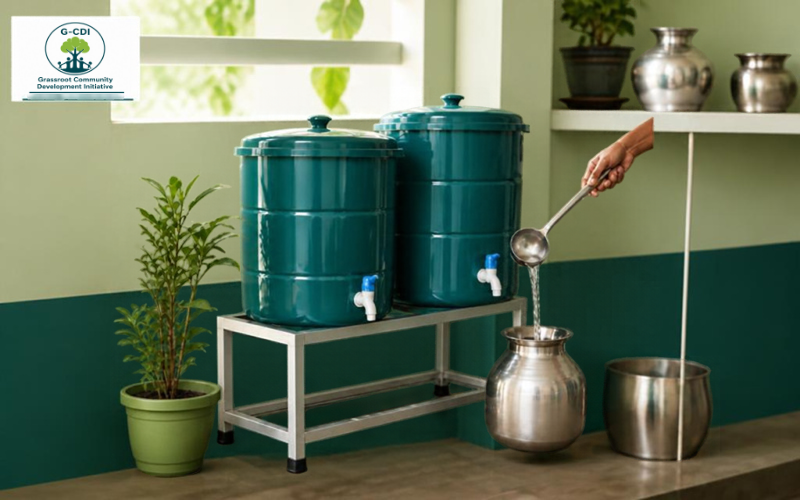
Safe water storage helps families:
At Grassroot Initiative, we encourage communities to make safe water handling a daily habit—not just an emergency response.
1. Choose the Right Water Storage Container
Selecting the right container is the first step in keeping drinking water safe.
✔ Use containers with:
A narrow opening
Grassroot Tip: A container with a tap greatly reduces contamination because hands and cups never enter the water.
2. Clean Storage Containers Regularly
A clean container is just as important as clean water.
A clean storage container protects your family's health.
3. Wash Your Hands Before Handling Water
Hands are one of the most common ways germs enter drinking water.
Always wash your hands with soap before:
Collecting water Pouring drinking water Cleaning storage containers Preparing food
This is especially important after using the toilet, changing diapers, handling animals, or cleaning around the home.
Remember: Clean hands help keep clean water safe.
4. Never Dip Cups or Hands into Stored Water
Every time a cup or hand enters the container, germs can be introduced.
Instead:
Small habits prevent big health problems.
5. Store Water in a Safe Location
Where you store water matters.
Proper storage helps maintain water quality for longer.
6. Treat Water Before Storage
If you are unsure whether the water is safe, treat it first.
Common household treatment methods include:
Treatment and safe storage should always go together.
7. Don't Store Water for Too Long
Fresh water is safer water.
Grassroot Initiative recommends:
8. Separate Drinking Water from Other Household Water
Use different containers for different purposes.
Label containers clearly for:
This simple practice helps prevent accidental contamination.
Grassroot Initiative Safe Water Storage Checklist
Before storing drinking water, ask yourself:
✅ Is the container clean?
✅ Does it have a tight-fitting lid?
✅ Has the water been treated if necessary?
✅ Are hands clean before handling it?
✅ Is the container stored off the ground?
✅ Is it kept away from animals and chemicals?
✅ Is the water used within a few days?
If you answered "Yes" to all of these, you're helping protect your family's health.
Working Together for Healthier Communities
At Grassroot Initiative, we believe that every household has the power to prevent disease through simple, practical actions. Safe water storage is more than a hygiene practice—it is an investment in healthier children, stronger families, and more resilient communities.
By adopting safe water handling habits and sharing these practices with neighbors, schools, and community groups, we can reduce preventable illnesses and build a healthier future for everyone.
Together, we can make safe water everyone's responsibility.




Share This News